


If your skin gets shiny through the day but feels normal or dry in some areas, a complicated routine can make it harder to work out what suits you. A good place to begin is with three basics: a cleanser, a moisturiser and sunscreen.
Oily skin still needs moisture. Cleansing too often or using harsh products to remove every trace of oil can irritate your skin. Dermatologists recommend a gentle approach and advise against scrubbing.
What is the difference between oily and combination skin?
Oily skin tends to look shiny or feel greasy across much of the face. Combination skin is oily in some areas, often the forehead, nose and chin, while other areas may feel normal or dry.
Skin can also change with the weather, hormones, products and other factors. You do not need to identify your skin type perfectly before starting. Notice how your skin feels after cleansing and throughout the day, then adjust the routine gradually.
The simple morning routine
1. Cleanse gently
Wash with a mild cleanser and lukewarm water. Use your fingertips and rinse well. You can start with a cleanser such as CeraVe Foaming Cleanser for Normal to Oily Skin, listed in Melas Beauty’s skincare collection
If you prefer a foaming gel, La Roche-Posay Effaclar Purifying Foaming Gel Cleanser is listed for oily, combination and blemish-prone skin. It contains fragrance, so consider that if your skin is reactive or fragrance-sensitive. If your face feels tight or uncomfortable after washing, use it less often or choose a gentler option.

You do not need to wash repeatedly to control shine. Dermatologists recommend washing up to twice a day and after sweating, rather than scrubbing or cleansing throughout the day.
2. Apply moisturiser if your skin needs it
Use a light layer of moisturiser, especially if your skin feels tight, dry or uncomfortable after cleansing. If you have oily skin, look for a formula labelled oil-free or non-comedogenic when those options suit you. The American Academy of Dermatology notes that moisturiser can still be useful for oily skin.
Melas Beauty lists CeraVe Moisturising Lotion in its skincare collection: Start with a small amount and see how it feels on your skin.
3. Finish with sunscreen
Apply sunscreen as the final step of your morning routine, before makeup. The NHS recommends at least SPF30 and at least 4-star UVA protection in the UK. Apply enough to cover exposed skin, and reapply according to the product instructions, especially after swimming, sweating or towel drying.
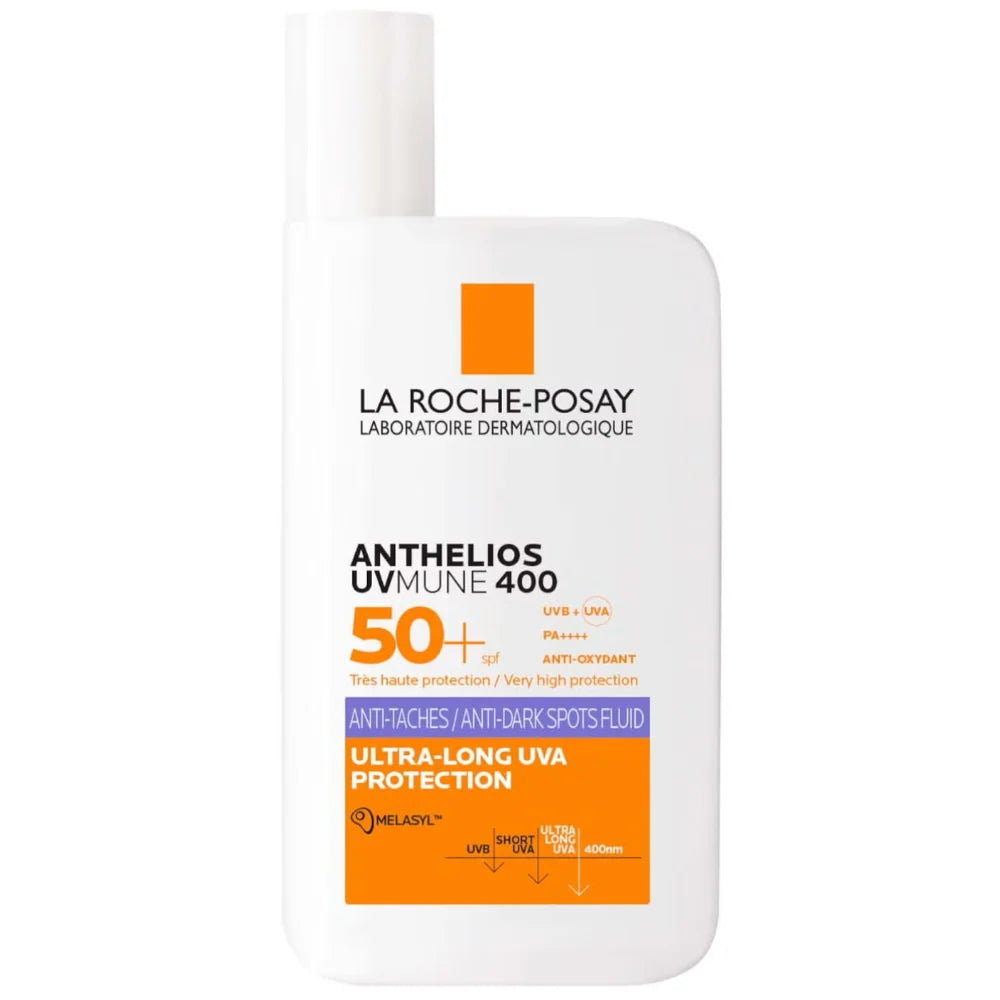
For a lightweight option, Melas Beauty lists La Roche-Posay Anthelios Anti-Dark Spot SPF50+ Fluid: . You can browse more options in the SPF collection.
The simple evening routine
1. Remove makeup and sunscreen, then cleanse
At the end of the day, remove makeup if you wear it, then cleanse gently. If you use long-wear or water-resistant makeup or sunscreen, you may prefer a separate makeup remover before your face wash.
2. Moisturise
Apply moisturiser if your skin feels dry or tight after cleansing. If parts of your face feel oilier than others, you can use a smaller amount on those areas and more where your skin feels dry.
Do you need a toner, serum or exfoliant?
Not to get started. A toner or serum is optional, and adding several new products at once can make it harder to tell what is helping or irritating your skin.
Begin with the basics and give your routine time to settle. If you later decide to add a treatment for a specific concern, introduce one product at a time and follow its instructions. Stop using it if it causes persistent irritation. The NHS advises against scrubbing acne-prone skin because it can irritate the skin and make acne worse.
How to make the routine work for you
- If your face feels tight after cleansing: try a gentler cleanser or cleanse once a day in the evening, rinsing with water in the morning.
- If your T-zone gets shiny: keep the moisturiser layer light in that area. You do not need to strip the skin to remove oil.
- If your cheeks feel dry: apply a little more moisturiser there rather than changing every step.
- If a product stings or causes persistent irritation: stop using it and simplify your routine.
- If you have frequent or painful acne: skincare alone may not be enough. A pharmacist or healthcare professional can advise you about treatment.
Frequently asked questions
Should oily skin use moisturiser?
Often, yes. Oily skin can still feel dehydrated or uncomfortable. Try a light amount and choose a product that feels comfortable for your skin. Dermatologists recommend moisturising oily skin and suggest looking for labels such as “oil-free” or “non-comedogenic” if you are prone to clogged pores.
How many times a day should I wash my face?
A useful starting point is morning and evening, plus after heavy sweating. Avoid repeated washing and scrubbing, which can irritate the skin.
Do I need toner in a beginner routine?
No. A basic routine can start with cleanser, moisturiser and sunscreen. Add optional products only when you have a clear reason to use them.
Can I use the same routine for oily and combination skin?
Yes, as a starting point. Adjust the amount of moisturiser by area if some parts of your face feel drier than others.
What sunscreen should I use?
Choose a sunscreen you are comfortable applying generously and reapplying. For UK guidance, the NHS recommends at least SPF30 and at least 4-star UVA protection. Check the protection markings on the product packaging.
Glossary
Combination skin: Skin that feels oilier in some areas and normal or dry in others.
Non-comedogenic: A product label meaning the formula is designed to be less likely to clog pores.
Oil-free: A label used for products formulated without oil-based ingredients. It may be a useful option for some people with oily skin, though no label guarantees that a product will suit everyone.
SPF: Sun Protection Factor, a measure of protection against UVB radiation.
UVA protection: Protection against UVA radiation. UK sunscreen packaging may show this with a UVA mark or star rating.
T-zone: The forehead, nose and chin, which can be oilier than the rest of the face for some people.
References
- NHS, Acne:
- NHS, Sunscreen and sun safety:
- American Academy of Dermatology, Face washing 101:
- American Academy of Dermatology, How to control oily skin
- American Academy of Dermatology, Moisturizer: Why you may need it if you have acne
This article is for general information and is not a substitute for individual medical advice. Check product packaging for current directions and ingredients. Melas Beauty does not provide medical advice.